The blame game is now delayed - rathar than pointing fingers, everyone is taking responsibility for the failures. To be more specific, everyone is taking charge of "fixing the problems." Today on CNN Chertoff refused to take responsibility for personal mistakes.
A former professor had an interesting comment related to my federalism comments from a few weeks ago. R Payne points out that the people who left New Orleans are not refugees, but internally displaced people. Moreover, responsibility lies then with the federal government (especially since these people were not displaced within Louisiana, but went to more than 23 other states).
Now, let's see where Rita ends up and what happens...

Getting better in the Big Easy
Things are getting better in New Orleans. Finally, the city is dewatering, and people can think of returning soon. However, now it is time for the fingers to REALLY start pointing in all directions.
One of the primary arguments that are sure to arise are the very issues that took the United States to war in 1861. Not slavery, but the very nature of federalism are at the heart of the response to Katrina. The Republican Party has sought to defer responsibilities to the states and the private sector. Appartently, they didn't get the message in New Orleans.
However, the reality is that no city or state could ever be prepared for such an immense disaster without being accused of greed. The costs to rebuild New Orleans, even without the loss to income they will face, far outstrip their financial abilities to pay. THe costs to the nation, however, are much greater. New Orleans is among the largest ports in the US and even the world, moving billions of dollars worth of goods throughout the middle part of America.
This loss is to the nation, and as such the nation bears a responsibility to help rebuild New Orleans. The City of New Orleans mustn't be rebuilt so that America has a place to party come February; the city must rebuild for the health of the national economy.
One of the primary arguments that are sure to arise are the very issues that took the United States to war in 1861. Not slavery, but the very nature of federalism are at the heart of the response to Katrina. The Republican Party has sought to defer responsibilities to the states and the private sector. Appartently, they didn't get the message in New Orleans.
However, the reality is that no city or state could ever be prepared for such an immense disaster without being accused of greed. The costs to rebuild New Orleans, even without the loss to income they will face, far outstrip their financial abilities to pay. THe costs to the nation, however, are much greater. New Orleans is among the largest ports in the US and even the world, moving billions of dollars worth of goods throughout the middle part of America.
This loss is to the nation, and as such the nation bears a responsibility to help rebuild New Orleans. The City of New Orleans mustn't be rebuilt so that America has a place to party come February; the city must rebuild for the health of the national economy.
Approval?
NOLA.com reports today that the National Forest Service offered use of firefighting planes to extenguish several fires raging in teh city. The local fire department is not able to respond - I am sure it is a mix of not being able to get equipment to the fire, not having firefighters on site, and lacking water pressure.
However, the Department of Homeland Security has not approved their use. Yes, they are waiting on approval. This is unacceptable. Mayor Nagin is correct - there are too many chefs in the kitchen. The disaster area is spread across at least three states, but the majority of this problem is within one state. The governor can't seem to handle this; General Honore is quite in charge, but only the military side; FEMA is supposed to be in charge, but is in abstentia and relies upon other leaders. Mayor Nagin has been stellar - the captain at the helm - but is cut off and can't rally his resources. They are dispersed and now tired- some police officers have resigned.
WWL Radio just noted that we didn't just have two days to know this storm was coming; we had 35 years. I am not even from New Orleans, and I knew that this could happen. Having been to the city, it is obvious that there is water everywhere. Why wasn't the state and federal government ready? Why are they waiting for approval?
The current government is woefully unprepared - they're distracted. While the DHS sits on the front porch with a shotgun waiting for a terrorist to come walking up the sidewalk, this hurricane has slipped in the back door and wrecked the house. We can only suspect another terrorist attack - we've known this hurricane is coming for years. We know another earthquake can hit LA or San Francisco at any time. The New Madrid Fault, straddling Arkansas, Missouri, Tennessee, Illinois, Indiana, and Kentucky is another earthquake risk zone.
Why is it we must wait on official requests when their is a problem? Why isn't there one agency or individual who can call these shots and send the appropriate resources to the appropriate place? Why aren't the structures already in place to allow resources to surge to one place? Why was it that Sheriffs from Loudon County Virginia were turned away?
This bureaucratic crap is just that. I certainly hope that when the Big One hits Tokyo, the officials here are much more prepared. I have my map ready to find my way home when I walk home from downtown. 100's of thousands practiced this on September 1, the anniversary of the last major earthquake here in Tokyo.
However, the Department of Homeland Security has not approved their use. Yes, they are waiting on approval. This is unacceptable. Mayor Nagin is correct - there are too many chefs in the kitchen. The disaster area is spread across at least three states, but the majority of this problem is within one state. The governor can't seem to handle this; General Honore is quite in charge, but only the military side; FEMA is supposed to be in charge, but is in abstentia and relies upon other leaders. Mayor Nagin has been stellar - the captain at the helm - but is cut off and can't rally his resources. They are dispersed and now tired- some police officers have resigned.
WWL Radio just noted that we didn't just have two days to know this storm was coming; we had 35 years. I am not even from New Orleans, and I knew that this could happen. Having been to the city, it is obvious that there is water everywhere. Why wasn't the state and federal government ready? Why are they waiting for approval?
The current government is woefully unprepared - they're distracted. While the DHS sits on the front porch with a shotgun waiting for a terrorist to come walking up the sidewalk, this hurricane has slipped in the back door and wrecked the house. We can only suspect another terrorist attack - we've known this hurricane is coming for years. We know another earthquake can hit LA or San Francisco at any time. The New Madrid Fault, straddling Arkansas, Missouri, Tennessee, Illinois, Indiana, and Kentucky is another earthquake risk zone.
Why is it we must wait on official requests when their is a problem? Why isn't there one agency or individual who can call these shots and send the appropriate resources to the appropriate place? Why aren't the structures already in place to allow resources to surge to one place? Why was it that Sheriffs from Loudon County Virginia were turned away?
This bureaucratic crap is just that. I certainly hope that when the Big One hits Tokyo, the officials here are much more prepared. I have my map ready to find my way home when I walk home from downtown. 100's of thousands practiced this on September 1, the anniversary of the last major earthquake here in Tokyo.
"This is not Iraq!"
After September 11, 2001 Rudolph Giuliani was the hero of the day. He served as the primary leader and motivating force.
Today, that man is Lieutenant General Russel L. Honore, native of Lakeland, Louisiana. As the Mayor of New Orleans said, " he came off the doggone chopper, and he started cussing and people started moving. And he's getting some stuff done". He is the leader shining in this sea of desparation.
As I write, according to CNN, the General is standing on a street corner directing traffic himself. He is directing several dozen military vehicles all filled with MPs. They are going to the convention center to create a beachhead, if you will, of order before they deliver food to the starving peole holed up there.
What an amazing moment... things are going to change on the American landscape.
Today, that man is Lieutenant General Russel L. Honore, native of Lakeland, Louisiana. As the Mayor of New Orleans said, " he came off the doggone chopper, and he started cussing and people started moving. And he's getting some stuff done". He is the leader shining in this sea of desparation.
As I write, according to CNN, the General is standing on a street corner directing traffic himself. He is directing several dozen military vehicles all filled with MPs. They are going to the convention center to create a beachhead, if you will, of order before they deliver food to the starving peole holed up there.
What an amazing moment... things are going to change on the American landscape.
Bad times are rolling...
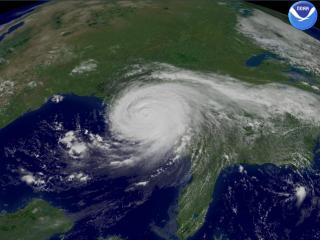
Chaos... Anarchy... Urban Warfare...
Are these the words we must use to describe one of my most beloved cities? Is it possible? As I sit here in Tokyo, I am shocked, enraged, and most of all embarassed. Is this my country?
The Washington Post reports today that this is the largest displacement of Americans since the Civil War 140 years ago. Tens of thousands of people are abandoning the New Orleans area. They are spreading out across the South, and into other regions of the United States. The impact will be huge.
First, many tens and thousands of these people will start to reconstruct their lives wherever they have landed. If you live from paycheck to paycheck, you will simply stay where you are once you get a job. The population will turn to a small town over the next week, but over the next six months I do not suspect the population will return to what it was a few days ago. This will have huge raminfacations for the tax base and planning of N.O.
In the communities where these people are going, life will not be the same. A sudden growth of 10,000, 20,000 or more people to Houston, San Antonio, Little Rock, Baton Rouge, Jackson, Birmingham, Atlanta, Jacksonville, and other cities throughout the region will rock local economies. Where will these people live? Where will they work?
Even in other cities where the population growth will not be as large (a few hundred or a few thousand) the sheer poverty will be a strain. Shelters in my hometown of Louisville, Kentucky are braced to accept stragglers who make the 1000 mile journey there. This will be a short term burden, but certainly can be overcome.
For the city of New Orleans though, this loss will be irreparable. The people who live in N.O. do so because they love the city. However, many people (a large percentage of the city was below the poverty line, and now below the water line too) will leave and never come back. Will cities attempt to relocate what will become unwanted refugees?
Another issue that is fuming under the surface is racism. The people who didn't or couldn't get out or wouldn't get out are the poorest members of the community. 2/3 of N.O. was African American. Many of them were poor, and most of the lowest lying neighborhoods were mostly (90% or more) African American. These are the people suffering the most.
For racists across the country, the images seen on TV will confirm their negative stereotypes. I know that not all the looting is committed by African Americans, but when the poorest and the blackest are who remain to loot, that is the image that will be captured.
As for the nation as a whole, the gas prices are real crisis. Prices have doubled in just a few months, and will not retreat to their former prices. Those gas guzzling Ford Expiditions and Explorers will become hugely unpopular. A trend of moving from these monsters to fuel efficient cars like the Toyota Prius will continue, and speed up. Most likely, Ford will close its two factories in my hometown, two of the largest employers in the city.
Both my father and my brother rely heavily on their vehicles for work - my brother is a police officer and as such works out of his car and my father works throughout central Kentucky, often driving a few hundred miles a day from worksite to worksite. These costs will be passed onto the taxpayers of my hometown and those who use the phones. Once winter sets in, heating oil and natural gas too will spike.
This is a doomsday situation for the Republican Party. Why is it we can send the U.S. military (and more importantly the health and welfare support they have with them) anywhere in the world, but we can't get food and water into N.O.? Why is it U.S. soldiers in Iraq have access to Subway, Sony Playstations, large screen TVs, not to mention a nightly buffet, but we can't get drinking water to N.O.? The response has been large and relatively quick, but the suffering has been worse. Something must be done, and must be done soon to help the people of New Orleans.
I am glued to the TV. N.O. isn't my hometown, but I proposed to my wife there. Just next to the Convention center there is balcony that overlooks the Mississippi River. That is where I did it - today the stores adjacent to that balcony are surely looted, the street is covered in feces, and people are living worse than animals. That is about as close to hitting to home I can imagine...
The shadow is fading...
Sixty years ago this week the second and third nuclear tests were conducted over the cities of Hiroshima and Nagasaki, Japan. Hot searing gases burst forth from a hypocenter nearly 1,000 feet above the ground. The glazing on roof tiles bubbled up. Houses burst into flames. The skin of people on the ground flash boild and started dripping to the ground. A shadow was burnt onto the stairs of a bank - a customer sitting on the front step, waiting for the bank to open, left her shadow for eternity.
However, this shadow had started to fade and the bank was rebuilt. The artifact must be preserved indoors. This is not the only shadow fading...
The shadow of Hiroshima represents the awareness of the people of Hiroshima, Japan, and the world. I think of the motto of the POW/MIA movement: "We shall not forget." However, we are forgetting. The realities of the war are horrendous, so many prefer not to hear about the zombie like figures wondering the streets of Hiroshima with their skin dripping off their outstretched arms. This is war! We prefer not to think about it.
It is important to remember the costs of war - including on the soldiers who carry it out on both sides. It is important not to forget what price has been paid to settle disputes by women, children, peace lovers and war mongers alike.
People in Hiroshima are forgetting what this meant - and people in many other parts of the world have never learnt the lessons of war. We rely again and again on the hard power to bandage over misunderstandings...
However, this shadow had started to fade and the bank was rebuilt. The artifact must be preserved indoors. This is not the only shadow fading...
The shadow of Hiroshima represents the awareness of the people of Hiroshima, Japan, and the world. I think of the motto of the POW/MIA movement: "We shall not forget." However, we are forgetting. The realities of the war are horrendous, so many prefer not to hear about the zombie like figures wondering the streets of Hiroshima with their skin dripping off their outstretched arms. This is war! We prefer not to think about it.
It is important to remember the costs of war - including on the soldiers who carry it out on both sides. It is important not to forget what price has been paid to settle disputes by women, children, peace lovers and war mongers alike.
People in Hiroshima are forgetting what this meant - and people in many other parts of the world have never learnt the lessons of war. We rely again and again on the hard power to bandage over misunderstandings...
Return on your Yen
The going rate for a private English tutor in Japan is about JPY3000, or nearly US$30. Being on the winning side of this equation, I am not complaining. I teach English a few hours a week - as somone once told me, I'd be a fool to forego this goldmine. When I teach, it is not uncommon to see another Japanese-Western pair with the obligatory dictionary and notebooks.
Likewise, nearly every station in Tokyo has a NOVA, GEOS, or Shane's English school within walking distance of the station. Some stations have all three, or even several offices of the same company. Japanese job boards for foreigners list hundreds if not thousands of English teaching jobs.
Since 1987, the Japanese government has imported Assistant English Teachers who in turn teach at Elementary, Junior High School, and Senior High Schools across the country. As of the last year, there are over 6,300 individuals, mostly from English speaking countries, on one to three year stints. Universities too hire non-Japanese instructors to teach their English classes.
In short, the Japanese government and people spend what amounts to the GDP of several small nations in order to support this army of native English speaker college-graduates working in Japan. What do they get for their money? Not much.
According to ETS, the Japan ranks second from the bottom for average TOEFL (Test of English as a Foreign Language) scores in Asia. North Korea squeeks in just below Japan. Around the world, only Niger, Mali, and a few other poor nations do worse. Korea, China, and Taiwan all do much better than Japan, for much less money.
What is the problem here? There are thousands of critiques of the Japanese education system, however, this single demonstration of English ability attests to very poor investments. Perhaps the quality of teachers could improve - usually the only qualifications sought are that one be a college grad and a native speaker. (Non-native experts in English language education, Linguistics, or other expertise need not apply). This is true, however, that still does not explain such a low performance. The college admissions tests and thus the primary and secondary education systems that are tailored for such test also must be revised. This too does not fully explain the poor performance. Many test takers are post University students. Why then, I ask, does Japan spend so much money but have so little to show for it?
Likewise, nearly every station in Tokyo has a NOVA, GEOS, or Shane's English school within walking distance of the station. Some stations have all three, or even several offices of the same company. Japanese job boards for foreigners list hundreds if not thousands of English teaching jobs.
Since 1987, the Japanese government has imported Assistant English Teachers who in turn teach at Elementary, Junior High School, and Senior High Schools across the country. As of the last year, there are over 6,300 individuals, mostly from English speaking countries, on one to three year stints. Universities too hire non-Japanese instructors to teach their English classes.
In short, the Japanese government and people spend what amounts to the GDP of several small nations in order to support this army of native English speaker college-graduates working in Japan. What do they get for their money? Not much.
According to ETS, the Japan ranks second from the bottom for average TOEFL (Test of English as a Foreign Language) scores in Asia. North Korea squeeks in just below Japan. Around the world, only Niger, Mali, and a few other poor nations do worse. Korea, China, and Taiwan all do much better than Japan, for much less money.
What is the problem here? There are thousands of critiques of the Japanese education system, however, this single demonstration of English ability attests to very poor investments. Perhaps the quality of teachers could improve - usually the only qualifications sought are that one be a college grad and a native speaker. (Non-native experts in English language education, Linguistics, or other expertise need not apply). This is true, however, that still does not explain such a low performance. The college admissions tests and thus the primary and secondary education systems that are tailored for such test also must be revised. This too does not fully explain the poor performance. Many test takers are post University students. Why then, I ask, does Japan spend so much money but have so little to show for it?
Are the aides freaking?
It's official - it is a war on terror. It isn't a crusade, and it isn't just a mere "global struggle against violent extremism." Bush has spoken - the United States is engaged in a neverending war on terror. Why this switch? Why this sudden "flip-flop?"
In January of 2003, Bush established the Office of Global Communications to coordinate the international message of this Administration. Staying "on message" is of considerable importance in the WH. Nearly everyday, this office issues the "Global Message of the Day." Curiously, the last message was March 18, 2005.
Likewise, only recently was Bush's friend, Karen Hughes, confirmed by the senate as Under Secretary of State for Public Diplomacy and Public Affairs. From the time of Margaret Tutweiler's sudden departure nearly a year and one half passed.
This lack of direction sounds oddly familiar. This lack of control sounds somewhat like recent stories out of Hollywood - maybe, something like Tom Cruise's recent parting with his long-term publicist Pat Kingsley. Without her advice, Cruise has drawn unwanted attention from the media, particularly regarding his Scientological beliefs.
Perhaps a lesson for Bush here is that to keep on message, he needs to figure out this communication stuff. Luntz and the others have figured this out in the domestic market, but actions still speak louder than words overseas. When will they ever learn?
In January of 2003, Bush established the Office of Global Communications to coordinate the international message of this Administration. Staying "on message" is of considerable importance in the WH. Nearly everyday, this office issues the "Global Message of the Day." Curiously, the last message was March 18, 2005.
Likewise, only recently was Bush's friend, Karen Hughes, confirmed by the senate as Under Secretary of State for Public Diplomacy and Public Affairs. From the time of Margaret Tutweiler's sudden departure nearly a year and one half passed.
This lack of direction sounds oddly familiar. This lack of control sounds somewhat like recent stories out of Hollywood - maybe, something like Tom Cruise's recent parting with his long-term publicist Pat Kingsley. Without her advice, Cruise has drawn unwanted attention from the media, particularly regarding his Scientological beliefs.
Perhaps a lesson for Bush here is that to keep on message, he needs to figure out this communication stuff. Luntz and the others have figured this out in the domestic market, but actions still speak louder than words overseas. When will they ever learn?
New Policy Directions
The contradiction between the “widening” and “deepening” of security perplexes the Japanese security debate. On one hand, it is unthinkable that any nation in the world would attempt to invade
The 1995 Kobe Earthquake response, the 1995 Sarin Gas attacks, and the attacks of 9/11 prove that traditional conceptions of deterrence are no longer fully applicable. Concerns of international terrorism, weapons of mass destruction (WMD) proliferation, and the proliferation of nuclear weapons and their delivery technology keep Japanese defense planners awake at night.
The examples represented here are only a few of a plethora of challenges facing the Japanese Gaimunsho. Christopher Hughes described this challenge best when he said,
Thus the challenge for contemporary security policy globally and across regions is to respond to intermingling issues such as high- and low-intensity unconventional and conventional military conflicts among state, intrastate, and nonstate actors; economic exclusion, disparity, rivalry, and dislocation; migration, organized crime, and piracy associated with economic integration and disintegration; and of natural and manmade disasters, infectious diseases, and environmental destruction.[2]
In short,
Anthony DiFilippo has outlined two options for Japanese security in the post-Cold War era.[3] Either it can stay its current course with the
1. Opposing nuclear weapons, but relying on the
2. Opposing use of force in resolving problems, but relying on the
3. Promoting nuclear non-proliferation, but “remaining more rhetorical than substantive.”[4]
4. Supporting the UN as arbiter of international disputes, but focusing on the
5. Maintaining article 9, but financing the eighth highest level of military spending on a PPP basis.[5]
DiFillipo’s recommendations are that
Hughes again notes that
Richard Tanter of the Nautilus Institute calls this new buildup the “Heisei Militarization.” This new militarization of
This buildup and reversal towards the Cold War paradigm is not without its dangers. As
By contrast, a semisovereign Japan, with the no war clause in its U.S.-imposed constitution and U.S. troops permanently based on its soil, has been at “peace” for nearly six decades, albeit a peace in which it provided critical economic, technological, diplomatic, and other support for every U.S. war in the region.[8]
Prime Minister Koizumi has chosen to side with the Bush Administration as demonstrated by his loyalty following the September 11 attacks and the subsequent military actions in
For now, this balancing act between the Cold War paradigm and the new security paradigm will work. However,
Is
[1] http://www.jda.go.jp/e/policy_.htm
[2] Hughes, Christopher W. “
[3] FiLippo, Anthony. “The Challenges of the U.S.-Japan Military Arrangement.”
[4] DiFillipo, p. 165.
[5] http://www.sipri.org/contents/milap/milex/mex_major_spenders.pdf
[6] Katsuyuki, Yakushiji. “Japanese Foreign Policy in Light of the
[7] http://www.nti.org/e_research/e3_37a.html
[8] Selden, Mark and Alvin Y. So, Eds. “War and State Terrorism: The
[9] Hwang, Balbina H. “The Evolution of the U.S.-Japan Alliance and Future Prospects.” Heritage Lectures. The Heritage Foundation. No. 861. December 21, 2004.
Subscribe to:
Posts (Atom)
Popular Posts
-
 Directed by Tony Scott, director of many Top Movies of Hollywood including his previous best on a train, The Taking of Pelham 1 2 3, Unsto...
 -
 Doug Liman, who was instrumental in giving the Top Movie Bourne Identity, is successful yet again in bringing out a winner in Fair Game. B...
 -
 An animated movie, fit for Top Movies slot, produced by DreamWorks Animation, Pacific Data Images (PDI) and Red Hour Films has been direct...
 -
 For Colored Girls has been sensitively handled by Tyler Perry, whose earlier works on Afro-American women have been Top Movies in their ow...
 -
 This movie is based on the last of the Harry Potter novel's written by J.K. Rowling. Screenplay has been scripted by Steve Kloves and ...
 -
 The Dark Lord Sauron makes the One Ring to rule the Middle Earth but when Prince Isildur cuts off his hand the Ring is lost for centuries....
 -
I was meeting with an English student and friend recently, and we discussed the low English ability in Japan again. She made an interesting ...
-
 'Beowulf' (2007) is set in Denmark in the year 507 A.D. This epic old English poem and ancient tale of heroism and betrayal is broug...
 -
 In their epic battle with the Titans, the three Olympians - Zeus, Poseidon and Hades were provided the help of Kraken, the Sea Lord, by Ha...
 -
Last night I went with my wife and friends to see Memoirs of a Geisha, or "Sayuri" in Japan. Before I saw it I had read several re...
