Unstoppable - Movie Review

Unstoppable
Directed by Tony Scott, director of many Top Movies of Hollywood including his previous best on a train, The Taking of Pelham 1 2 3, Unstoppable is another roller coaster train saga, which got the PG 13 rating for some of its violent scenes and explicit dialogues.

Starring Denzel Washington (who has acted in many Top Movies) as Frank Barnes, a veteran engineer in a railway company about to retire and Chris Pine (star of many Top Movies) as Will Colson, a trainee attached with Frank, Unstoppable moves at a fast pace, despite having a weak storyline. Frank and Will are on a train with their duties etched out clearly. Frank is in control of the train and Will is to supervise the safety of the attached cars, where he defaults by overloading the train with extra cars.

On their journey they are encountered with a serious problem, which is not concerning their train, but another train that has been accidentally let loose on the tracks by a couple of yardman. This unmanned train contains a very deadly chemical that can destroy a whole city if it spills over. Frank is apprised of the situation and the management of the rail company wants to use his long experience in stopping the unmanned train. The director has turned the movie - fit to be ranked as a Top Movie - into a visual treat which does not let the viewers think about the non-existent story.

Forgetting their own squabbles, Frank and Will get onto the job and very deftly handle the situation with expertise and cool minds. The unmanned train is on the same track as their train, which is carrying children on a trip and the chemical loaded monster has to be stopped before it wrecks havoc on an unaware city. In the pathway of the chemical loaded train is a sharp bend, which if taken at a high speed, will force the train to overshoot the track and plunge it straight into the city, exploding the chemical barrels and spraying the toxic chemical on innocent citizens.

Technical marvels that have been used by the director, with no CGI effects, are definitely a treat for the adrenaline and the excitement has been very effectively portrayed by both the actors, who are veterans of many action Top Movies. The action sequences have been excellently photographed and the sleek editing has made them blend into a continuity that makes for the thrilling finale of the film, when everything is sorted out and many lives are saved by the heroic deeds of the two heroes.

Fair Game - Movie Review

Fair Game - Movie
Doug Liman, who was instrumental in giving the Top Movie Bourne Identity, is successful yet again in bringing out a winner in Fair Game. Based on two top selling books, Fair Game is a political thriller, set in the period of President Bush and involving his policies with regard to Iraq war and the political turmoil he had to face in his country. It spins the tale of back-stabbing, getting personal in political wars and breaking up of homes in order to get political mileage. In short, the movie is about the murkier games politicians play to achieve the end-result, where means are of no consequence.

Naomi Watts, the Top Movies actor, plays CIA agent Valerie Plame Wilson, who is married to diplomat Joe Wilson, played by Sean Penn, the star of many Top Movies, and is running undercover operation in the war torn Iraq. Unaware of her true identity, Joe Wilson is arduously campaigning against the Bush administration for the wrongs being done in Iraq and the sufferings of the US soldiers in the unnecessary war being fought in Iraq.

The political bickering get too hot for the Bush administration to handle, when Wilson, in an article written in New York Times, accuses the President of messing up the Iraq war on the Weapons of Mass Destruction issue. To save their own political careers, the top politicians take CIA into confidence and plan to cut down the towering image of Wilson. The scapegoat has to be Valerie and through her Wilson must be cut to size zero of his political career.

All the good work that Valerie has done in Iraq, from safeguarding the undercover American scientists working secretly in Iraq and busting many counter-espionage plans of the Iraqi intelligence, is forgotten by the greedy political top brass. The President launches a counter attack on Wilson in the Senate and is able to barely save his position. Then, in the discreet manner, that is a favorite with the CIA, Valerie is exposed and disgraced. A shattered Wilson is forced to lie low and Valerie is unable to save her broken home.

An out and out dialogue based movie, with a strong narrative and a taut screenplay, helps Liman in bringing out the best from his star cast. Both Naomi and Penn perfectly play their parts with constraint and successfully bring out the characters alive on the screen. The true story of Valerie has been brought out on the screen very effectively by Liman, without delving into the war scenes or field actions of Valerie. There's not much of action but the movie has an undercurrent of tension, which is unleashed by the director in the end. Definitely worth a visit to the theaters.

Lord of the Rings: The Fellowship of the Ring - Movie Review

Lord of the Rings: The Fellowship of the Ring
The Dark Lord Sauron makes the One Ring to rule the Middle Earth but when Prince Isildur cuts off his hand the Ring is lost for centuries. In the present times the Ring is with Hobbit Frodo Baggins, enacted by Elijah Wood with a performance of top rated movies. Wizard Gandalf the Grey, played by Ian Mckellen's worthy of top movies performance, finds that the Ring actually belongs to the Dark Lord Sauron. Returning to Bag End he advices Frodo to immediately leave for Rivendell and sends Samwise Gamgee, played by Sean Astin with a top movies performance, Merry and Pippin with him.

On way to Rivendell with Elf Arwen who has magical powers, Frodo is joined by Strider but Gandalf joins Frodo in Rivendell and they learn from Elrond, chief of the Elves that the Ring can only be destroyed in the fires of Mount Doom where it was made. Frodo forms the 'Fellowship of the Ring' with Gandalf, Elf Legolas, Dwarf Gimli, Strider a.k.a Aragorn the Prince of Gondor, played with aplomb like a top rated movies act and Boromir Steward of Gondor's son, enacted by Sean Bean with a strong top 10 movies act and they leave for Mount Doom.

The Fellowship is ambushed by the forces of Saruman on the way but they successfully reach Lothlorien, a safe haven of Elves ruled by husband and wife duo of Celeborn and Galadriel. Galadriel tells him that it's in his destiny to destroy the Ring and gives him the magical Phial of Galadriel when they leave for Parth Galen. At Parth Galen, after Boromir's failed attempt to snatch the Ring, Frodo decides to make the journey alone. After he leaves Uruk-hai under Lurtz's command attack the Fellowship but are stopped by Merry and Pippin. Aragorn tries to avert Lutz's attack on Boromir but is unable to save him. Merry and Pippin are captured and Aragorn, Gimli and Legolas pursue the Orcs to rescue them. Frodo is joined by Sam on the way and they continue their journey to Mount Doom.

Peter Jackson, who has been associated with many top rated movies projects, directs this magic oriented tale about a ring which has Dark Powers. The movie is a sure chart buster and is bound to be in the top 10 movies list of the year. The story and the characterization have been deftly handled by Peter using digital make-up special effects and the viewer is not going to have a dull moment.

Peter has decided to follow the original story of J R R Tolkien which is full of top movies stuff and make a trilogy of the ring. The musical score has been composed by Howard Stone who has got splendid performances by The London Philharmonic Orchestra, New Zealand Symphony Orchestra and The London Voices. Viewers are going to wait eagerly for the next edition and the final one to see the fate of the ring.

Harry Potter and the Deathly Hallows - Part 1 - Movie Review

Harry Potter and the Deathly Hallows - Part 1
This movie is based on the last of the Harry Potter novel's written by J.K. Rowling. Screenplay has been scripted by Steve Kloves and the movie has been produced by J.K. Rowling, David Heyman and David Barron. Directed by David Yates, it was split in two parts after being filmed in one schedule. The series has met with stupendous success and all previous six Potter movies have been Top Movies of their times.

This part starts with the Minister of Magic announcing to the wizard media about the Ministry gaining strength with the increase in strength of Lord Voldemort. On hearing from Privet Drive about the departure of Harry, Voldemort takes the wand from Malfoy, since his own wand is ineffective on Harry. Meanwhile at Privet Drive, it has been decided to create six decoys of Harry, before Harry is moved to safer place. The decoys are ambushed and killed along with Mad-Eye and Hedwig, but Voldemort's borrowed wand is unable to kill and slice Harry. Harry dreams of Voldemort torturing Ollivander on the failure of his wand. Actors who had given the successful Potter movies earlier, have once again come together to give this Top Movie.

Death Eaters disrupt the wedding of Fleur Delacour and Bill Weasley. Harry, Hermione and Ron disapparate London and live at 12, Grimmauld Place, where they discern that the inscription R.A.B on the Horcrux locket stands for Requlus Arcturus Black and that the original Horcrux has been stolen by Fletcher. But Fletcher when apprehended by Dobby and Kreacher, discloses of the locket being with Umbridge, which the trio is successful in getting and flee to the forest. To negate the suspicious thoughts that the locket generates, the trio take turns to wear it. Ron, on wearing the locket, prevails over by suspicion about Harry and Harmione and leaves them. Harry again dreams that Voldemort is seeking information from wand maker Gregorovitch, who reveals that the original wand was stolen by a small boy. Voldemort leaves to find the thief.

In the evening harry follows a Patronus, which leads him to the sword of Gryffindor which can destroy the Horcrux. Harry is unable to get the sword from the frozen lake, but with Ron's help they finally are able to destroy the Horcrux. After destroying the Horcrux, the three of them visit Lovegood to enquire of a symbol that they had seen quite a few times on their voyage. Lovegood tells them that the symbol stands for the Deathly Halllows, where they can find the Resurrection Stone, the Elder Wand and the Cloak of Invisibility. However Lovegood deceives them to Death Eaters so as to get his abducted daughter back from Voldemort. Harry has the vision that Voldemort has learned from Grindelwald that the Elder Wand is with Dumbledore.

Voldemort arrives at the tomb of Dumbledore and finds the Elder Wand there and shoots a lightening bolt in the sky to make the announcement that he has got the original Elder Wand. The top movie ends here to be finally culminated in the final episode of the Harry Potter Top Movie, Part 2

For Colored Girls - Movie Review

For Colored Girls has been sensitively handled by Tyler Perry, whose earlier works on Afro-American women have been Top Movies in their own rights and it would not be fair to this talented director to label him a feminist. Yes, he can be aptly labeled as having brought the sufferings of these women in a feminist way on the screen, by highlighting their feminism against the macho-ism of the men, at whose hands they suffered. No other director would have done justice to Ntozake Shange's landmark 1975 play, revolving around the lives of two sisters, surrounded by a few women who have much to give and little to get from the male dominant society they live in.

Of the two sisters, the elder one is Tangie (Thandie Newton, star of many Top Movies), who cares two hoots for life, is a whore not by choice but by compulsion and the younger one is Nyla (Tessa Thompson), who is trying to be a teenage dance prodigy. Both the actors have given outstanding performances which are fit for Top Movies. After the death of their father, the two girls have been living with their mother (played by Whoopi Goldberg, veteran of many Top Movies), who is a religious fanatic, in an apartment situated in an old building and where all the other characters of this lovable movie reside.

There is the apartment manager (portrayed by Phylicia Rashad) who is caring and loves the sisters, taking good care of them in the absence of their mother and filling the void of loneliness in her own life. Crystal (played by Kimberly Elise, a Top Movie actor), who works as an assistant to Jo (Janet Jackson, the Top Movie star), the high profile editor of a magazine, is also leading a life full of sufferings at the hands of her boyfriend (enacted by Michael Ealy), who is a Iraq war veteran and treats her badly. Then there is Yasmine (Anika Noni Rose), dance teacher of Nyla and a kind hearted soul, who also works as an organizer for an AIDS Clinic (run by Loretta Devine). The final character in this saga of feminine apathy and silent sufferings is a Social Worker (Kerry Washington) who tries her best in helping Crystal with her two children.

The lives of these strong willed women are not simple, are full of complications but the underlying strength of their characters is steel like and they are determined to lead their lives in their own ways. This is what has been portrayed effectively by Perry. The sufferings these women face in their lives are the basis of their mutual admiration and their standing in solidarity. This is one movie that is not only a must for the women but also an eye opener for men. See it to understand the silence of the suffering feminine gender.

Megamind - Movie Review

Megamind
An animated movie, fit for Top Movies slot, produced by DreamWorks Animation, Pacific Data Images (PDI) and Red Hour Films has been directed by Tom McGrath to a screenplay written by Alan J. Schoolcraft and Brent Simons. Voiced over by Will Ferrell, Jonah Hill and Brad Pitt, the movie is a clever piece of intelligent story-telling and equally deft direction.

An alien, Megamind (whose voice-over is Will Ferrell - scion of many Top Movies), sent to Earth by his parents because his home planet is being sucked by a black hole, becomes a loser to Metro Man (whose voice-over is Brad Pitt - Hero of many Top Movies), another alien, who is savior of Metro City. His only companion is Minion (whose voice-over is David Cross - actor of many Top Movies) and both are unwanted in the Metro City. Realizing that he is good at destructive ideas and can never succeed until Metro Man is alive, Megamind plans to eliminate him. He kidnaps Roxanne Ritchi (whose voice-over is Tina Fey - scion of many Top Movies), a news reporter and holds her captive in the city observatory as a bait to lure Metro Mind in a fight to death. Metro Man is eventually killed by the Death Ray of Megamind, who is now crowned king of Metro City's underworld.

With no challenges left in life, Megamind starts getting bored and decides to create an opponent with the serum of Metro Man. Disguised as a Museum curator, Bernard he has started dating Roxanne and during one such meeting, gives her the indication of what Megamind has in store for the people of Metro City. Roxanne, along with her cameraman Hal Stewart (whose voice-over is Jonah Hill - actor of many Top Movies) enters the hideout of Megamind to stop him. In the ensuing fight the serum gets injected into Hal, who becomes Tighten, the next savior of Metro City. Megamind's true identity is accidentally revealed to Roxanne and she severs her relationship with him.
Tighten challenges Megamind to a fight, which Megamind loses miserably and decides to end his life. Minion persuades him to find a way to defeat Tighten and both are eventually successful in getting Roxanne by their side. In the final fight, the trio is successful in eliminating Tighten, when Megamind is able to extract the serum of Metro Mind from Tighten. Megamind's change of heart gets him the respect of the people of Metro City and he is crowned savior of Metro City.

A typical hero vs villain story, the intelligent twist in the movie is turning Megamind into a hero from a super villain which earns him the love of people. Love wins even a diehard opponent.

Red 2010 - Movie Review

Retired: Extremely Dangerous - REDRED
Retired: Extremely Dangerous - that's RED for you and the numerous young CIA agents who find this out the hard way. A spy drama, woven around the lives of few ex-CIA field agents, who have retired, but seems are not tired or worn out, neither they have forgotten the tricks of the trade, nor the instinct to survive in the deceitful world of espionage and counter-espionage. The movie, sure to rated in the Top Movies list is directed by the successful and energetic Robert Shwentke, who churns out a tale involving Bruce Willis, the ace star of Top Movies, as a retired CIA operator, who is called back for a top secret mission, which he has to undertake along with some of his ex-companions and field agents.

Frank Moses (Bruce Willis) is a bit of a romantic at heart and keeps himself amused by talking on telephone to Sarah, who is responsible for sending his pension. The talks culminate into a date and Frank is making plans with Sarah ( played by the stunning Mary-Louise Parker, a star of Top Movies) for fixing up the date, when his house is attacked by the Special Force Unit under the command of the young and enthusiastic agent William Cooper (played by Carl Urban, a Top Movies actor). Frank is able to escape from the commandos but his only thought is to first save Sarah and then find out about this murky business.

In his search for the truth behind this attack, he finally catches up with Cooper but he is unable to tell him anything about the reason behind all this. Cooper tells Frank that knowing the working of the agency he must understand that he is only told what concerns his work, no more no less than that. Digging further into the affair, Frank uncovers the murder of a reporter who was investigating into an operation involving Frank and who has left a list naming Frank and some of his former operator colleagues.

Frank remembers Joe (played by Morgan Freeman, the veteran star of Top Movies), than the psycho Marvin (played by John Malkovich, the top star of Top Movies), Ivan (Brian Cox) and finally the deadly but elegant Victoria (enacted by the beautiful and gorgeous Helen Mirren, the queen of Top Movies). But he fails to understand why anyone would come after them after so many years. The old comrade-in-arms come together to find an answer to this mystery and also to keep the young Cooper at bay.

Robert Shwentke is successful in creating a question and then intelligently answers it. The viewers come out of the theatres satisfied, as if they themselves solved the mystery. That's the winning formula of a successful Top Movies.

Clash of the Titans - Movie Review

Clash of the Titans
In their epic battle with the Titans, the three Olympians - Zeus, Poseidon and Hades were provided the help of Kraken, the Sea Lord, by Hades. After their victory, the landmass was taken over by Zeus, the waters were to be ruled by Poseidon and Hades was tricked by Zeus into ruling the underworld. Centuries later, Spyros, a fisherman finds a coffin on the sea front and finds an infant with a dead lady in it. The infant is raised by Spyros as his own son and comes to be known as Perseus, well portrayed by Sam Worthington, who is a regular in the top 10 movies list.

A grown up Perseus and his family see some soldiers from Argos destroying Zeus's, the character essayed by Liam Neeson, a veteran of many top rated movies, statue and declaring war on him. Hades, a role played to perfection by Ralph Fieness, the trusted man for the top movies, in the form of Harpies kills many of the soldiers and the rest flee with Perseus, whose family has been wiped out in the battle. King Kepheus and Queen Cassiopeia of Argos, a kingdom under God Zeus, compare their daughter Andromeda, the beauty well etched in Alexa Develos, the first choice for such roles by the top 10 movies makers, to the Goddess Aphrodite and declare they are Gods. Hades destroys the remaining Argos soldiers and ages Cassiopeia to her death. Recognizing Perseus to be the Demigod son of Zeus, he declares to Argos king to sacrifice Andromeda before Kraken or see Argos destroyed. Messenger God Hermes informs Zeus about Perseus and urges him to accept him but Zeus refuses.

Perseus is imprisoned by the Argos King for he refuses to fight the Gods. In the prison he learns about his real parents, Acrisius, well played by Jason Flemyng, actor of many top movies and Danae, the portrayal well adopted by Tine Steplefeldt, a superb choice of the top movies, from a woman named lo, a difficult role easily done by Gemma Arterton, preferred artist of many top rated movies. He also learns that Hades is responsible for his family's death and killing Kraken would destroy Hades. He decides to join Argos in their search of Stygian Witches. Acrisius who's living in disguise as Calibos is given super powers by Hades to prepare him to kill Persues so that Hades can take revenge of the betrayal during the clash with Titans. In the forest Persues finds the sacred Sword of Olympus and Pegasus, the flying horses. Calibos fails in his attack to kill Persues and flees after he loses a hand in battle. After the battle Persues's wounds are healed by Sheikh Suleiman, Lord of the Djinns who join Persues in the battle against Gods.

Stygian Witches tells them that head of Gorgon Medusa will turn Kraken to stone. Only Persues survives after beheading Medusa and finds that Calibos has killed lo. With the Olympus sword he kills Calibos, who is transformed back to human form. Riding on Pegasus, Persues heads for Argos where Hades is preparing for the sacrifice. Persues turns Kraken to stone and saves Andromeda, banishing Hades to Underworld. Zeus offers him a place on Olympus and Andromeda proposes him to be King of Argos but Zeus is interested in living on Earth.

The film, directed by Louis Leterrier is loosely based on the Greek Mythology character of Perseus. Adaptation by Leterrier has been astonishing and the presentation mind blowing. The viewers are teleported to another world and seem to be lost in it without realizing it. Leterrier has pumped lot of energy, imagination and certain madness into the movie. The imagination is visible, the energy can be felt but the madness simply engulfs you. Go ahead and get involved.

The Lone Ranger - Movie Review

The Lone Ranger
It's a modern twist on an old American west classic 1950s television show, The Lone Ranger. Produced by Jerry Bruckheimer, fresh off 2011's Pirates of the Caribbean: On Stranger Tides, this new version features plenty of high-flying action and just enough comedy to make this a potential summer blockbuster.

Cast

Johnny Depp takes on the role of Tonto and delivers beautifully. Just as Captain Jack Sparrow in the Pirates series, Depp is serious but offers just enough light-hearted comedy to have fans rolling in their seats. The main character, John Reid a.k.a. the Lone Ranger, is played by up-and-comer Armie Hammer. Hammer is best known for playing the Winklevoss twins in The Social Network. Tom Wilkinson, who played Ben Franklin in John Adams, plays Latham Cole while William Fichtner is Butch Cavendish and Helena Bonham Carter plays Red Harrington.

Summary

The movie is Tonto's recollection of how John Reid came to be the Lone Ranger. John Reid returns home from the city vowing Texas to be his home. The film begins with Reid being deputized as a Texas Ranger joining his brother in bringing order to the Old West. Eight Texas Rangers, Reid included, are brutally attacked in the Texas wilderness. Only one of the Rangers survives, miraculously. He is found by a Native American spirit warrior, Tonto. Tonto will nurture Reid back to health and band together with him in a fight for justice. The two attempt to find those responsible for the murders of Reid's fellow Rangers and fight all sorts of injustice along the way. As a result of his exploits, the Lone Ranger becomes a legendary hero.
The Lone Ranger
Review

The Lone Ranger will be one of the summer's best films. A great story that many are familiar with coupled with serious fast-paced action make this a must-see. Depp alone is reason to see the movie. He is oddly comical as "Keemosabe's" right-hand man. With his trusty horse, Silver, the Lone Ranger and Tonto battle bandits and duel on fast-moving trains. The action is relentless and Depp leaves fans yearning for a sequel. Early in the movie after Tonto finds Reid alive, Tonto is found talking to Silver. Later, he shares with Reid that Silver has told him that Reid is a great warrior who cannot be killed. In typical Depp fashion Tonto states, "Something very wrong with that horse." It's another eccentric character played perfectly for Depp and treat for summer movie fans across the country.

The Internship - Movie Review

The Internship
It could be Wedding Crashers all over again as Vince Vaughn and Owen Wilson team up once again as salesman who must change careers. They end up in the digital age at Google, working as interns with a bunch of young twenty-somethings.

Cast

Shawn Levy directs this film and it will be the second collaboration with Vaughn and Jared Stern, who produced the movie with Vaughn. The three worked together on 2012's The Watch. Vaughn and Wilson play Billy and Nick, the main characters, but the supporting cast is solid. Rose Byrne, who was great in Bridesmaids, is just as good as a love interest to Nick. John Goodman has a small role as Billy and Nick's former boss and you'll recognize B.J. Novak, of The Office fame, and Max Minghella of the Social Network.

Summary

Billy and Nick are fired after Goodman tells them that he is closing his business. The two fast-talking salesmen search for new jobs when Billy finds the answer - a coveted internship at one of the world's biggest companies, Google. Billy and Nick compete with the much younger crowd for the opportunity to get hired by the company. Along the way there is a tremendous amount of sarcasm, typical of Vaughn, and humor as Vaughn and Wilson rib their younger cohorts. As in Wedding Crashers, they will become mentors for their new young socially awkward friends. Vaughn and Wilson, and the many others, will also get to wear funny, colorful hats. Yes, the ones with the propeller on top.

Review

While it might look like a two-hour commercial for Google, the film is entertaining. Vaughn and Wilson and their brand of slapstick comedy never fails. Sure, they seem childish at times, but the bottom line is they will make you laugh. And Google gets in on the action as co-founder Sergey Brin actually makes a few cameo appearances in the movie.

There are numerous one-liners that will generate laughter as well as the sarcasm-filled rants that Vaughn is known for. There is the token inspirational speech from Vaughn, who will use Flashdance to motivate his young teammates. As Billy and Nick track down the elusive Charles Xavier, one of the movie's memorable scenes shows Vaughn being punched in the face and Wilson getting punched, well, below the belt, by a guy in a wheelchair. The Internship is not for young ones as there are several scenes containing adult humor, but the movie has enough laughs to make the two hours worth it.

Despicable Me 2 - Movie Review

Despicable Me 2
If you loved it the first time around, the Despicable Me crew is back for a second go-around, and it will entertain like the first. The animated adventure-comedy will not disappoint as actors Steve Carell, Russell Brand, and Miranda Cosgrove reprise their roles. Kristen Wiig is also back albeit in a different role.

Summary

The ex-villain Gru (Carell) saved his three adopted daughters - Agnes, Edith, and Margo - from the evil organization, Vector, in the original film. Living the unexciting life of an everyday dad, Gru is paid a visit by agent Lucy Wilde, played by Wiig, who voiced Miss Hattie in the first version. Wilde recruits Gru to the Anti-Villain League headed up by one Silas Ramsbottom. The league is dedicated to fighting world-wide crime and informs Gru that a new villain, Eduardo (Benjamin Bratt), is on the loose wreaking havoc upon the world. The Anti-Villain League believes that Gru, once being a criminal, understands how Eduardo thinks and can help to defeat him. Once again, Gru, his girls, his minions, and his assistant Dr. Nefario will have to save the world.

Cast

Producer Chris Meledandri assembled a great cast with Carell, Wiig, Cosgrove, and Brand returning to the movie. Originally, Al Pacino was set to play the villain, Eduardo, but left the film due to creative differences. Bratt, of Law & Order and Miss Congeniality fame, was then cast in the role. British comedian Steve Coogan lends his voice to Silas Ramsbottom and Dana Gaier and Elsie Fisher are back as Edith and Agnes.

Review


Carell is great once again as Gru as he tries to become a good father to his three lovable young girls. Being recruited into the Anti-Villain League is an honor for Gru, but he must balance his role of crime-fighter with that of being a dad. The amount of humor in the film will have you laughing non-stop. Wiig is perfect for the role of Wilde playing the serious agent type with just a bit of a wild side. The soundtrack features songs by Eminem that will have you, and the rest of the audience, bouncing in your seat. And if that's not enough, Despicable Me 2 is worth seeing just for the minions. Yes, those lovable, yellow little creatures with their own language are at it again as Gru's helpers. If you have seen the original, this is one sequel that you will not want to pass up.

Ant-Man - Movie Review

Ant-Man - Movie Review
Ant Man continues the Marvel Cinematic universe, set after the events of The Age of Ultron. It even ties back somewhat to Agent Carter Hailey Atwell and John Slattery appear as aged versions of Agent Carter and Howard Stark at the beginning of the movie as a set up to the rest of the plot. There are even tie ins to the next Captain America movie (with a post credits scene) and ultimately to the Avengers Infinity wars movies (which will include Ant Man).

Without giving too much away, Michael Douglas's character Hank Prym one of the original S.H.E. I. L.D. agents, and inventor of the ant man suit, a technology that allows humans to shrink to the size of an ant, and gain the equivalent of an ant's strength to its size hires burglar Scott Lang, played by Paul Rudd to break into his former company and steal a second suit being developed by Prym's one time protege now rival Darren Cross (played by House of Cards' Cory Stoll). Evangeline Lilly plays Hope van Dyne, Prym's daughter who reluctantly helps Lang train to become ant man.

At its core the film is a heist movie wrapped up in a superhero movie. It is like Oceans 11 meets The Avengers. It does very well as the origin story for the various stand alone characters, yet blends into the existing Marvel Universe, with the biggest cross-over being the meeting between Ant Man and Falcon about halfway into the movie. Paul Rudd does a great job with being a hero that is on the fringe of being a true good guy, who is willing to break the rules or the law to do the right thing. He also brings an air of every man with a smart ass quality that he is know for from his other work. It has a lot of the humor that many of Marvel Films have had in doses.

For those who get the actual disc, the movie looks and sounds great on blu ray. I have the one disc version, which for extras has a few short behind the scenes and making of features, about 10 min worth of "news" footage that help flesh out some of the character's backgrounds, some deleted scenes and a gag reel. Good for what is there. I think those who are fans of the Marvel Universe movies and TV shows will enjoy this. It is also different enough that if you are having super hero movie fatigue, you can find it enjoyable because it is definitely not like any of the ones that have come before it. While some of it is a bit silly to be sure (but really all the superhero movies are to some extent) this movie plays on that a bit and almost does it tongue in cheek. The acting is very good, it it does well staying on the fringes of the larger story, while telling its own.

The Wolverine - Movie Review

The Wolverine
Fans of the X-Men series and the comic book hero, as well as many of their wives, will salivate over The Wolverine, the sixth installment within the mega-successful series. The movie features Hugh Jackman again as the main character as he battles with his immortality. Jackman gets a producer credit for the film, which is set in Japan.

Cast

After Jackman in the lead role of Logan/Wolverine, the cast is a Who's Who of Japanese actors and actresses. Tao Okamoto plays Mariko Yashida, who is the daughter of an important Yakuza crime boss. Mariko is pulled between her love and feelings for Logan and also her required duty to her father. Mariko's father, Shingen Yashida, is the number one antagonist to Jackman's Wolverine. Moviegoers may recognize Will Yun Lee, an American-born actor of Korean descent. Lee has played a recurring role on the new Hawaii Five-O series and recently served as Captain Cho in the remake of the 1980s classic Red Dawn.

Summary

The film is set some time after X-Men: The Last Stand, where Logan has traveled to Japan to escape. He realizes that everyone he has loved and cared about dies and, being immortal, he does not. Faced with so much pain, he retreats into his world while living in Japan. He is happy to get away from everything and everyone until a mysterious someone from his past tracks him down. Someone he has saved in the past finds Logan to give him exactly what he is looking for - mortality. Logan is hired to protect Mariko Yashida when she is threatened in a war between the Yakuza and local law enforcement. Logan/Wolverine will be pushed to his emotional and physical limits as he goes to battle the Yakuza.

Review

If you are an action movie seeker, you will find enough action in The Wolverine to tie you over for weeks. The sheer site of the shirtless Jackman will be all it takes to get the wives and girlfriends in the seats. Set in Japan, there are plenty of samurai swords and ninjas for the action lover. Throw in a bullet train ride and some nice explosions and The Wolverine proves its worthiness as an action film extraordinaire. But, the real story is Wolverine's battle with his own personal demons. He doesn't know how to deal with his own immortality. He has a tough time watching his loved ones die. But all that will change and Wolverine will come out of his ordeal stronger and more powerful than ever.

World War Z - Movie Review

World War Z
Based on the novel of the same name, World War Z is an apocalyptic thriller that will leave you saying it's the best zombie movie you have ever seen. While the movie deviates from author Max Brooks' novel, its version is surprisingly good. With mega-star Brad Pitt in the lead role, it's hard to go wrong.

Cast

Pitt is the star of this film playing Gerry Lane a United Nations employee. When the world war starts, he will be thrust into action to try and find a way to stop the zombies from overtaking the world. Mireille Enos (HBO series and The Killing) plays Karen, Lane's wife and mother of their two daughters. Matthew Fox and Bryan Cranston, of the TV hit Breaking Bad, also star. Marc Forster, who did the James Bond film Quantum of Solace, directs.

Summary

Gerry Lane is a U.N. employee and family man who loves his wife and two daughters dearly. Living in New York City, Lane and his family learn that martial law has been declared. While traveling through the city, the Lane family begins to see why. Mayhem and chaos ensue as a zombie pandemic has begun. The zombies are toppling armies and governments all over the world and looking to bring an end to humanity. In a race against the clock, Lane must leave his family and travel the world to find a way to save the human race.

Review

If you are a fan of Brooks' novel, be prepared. The movie's adaptation is much different than what you have read. Don't worry, though. That's a good thing. While the actual making of the movie wound up taking a little longer than was first thought, the end result is a solid zombie movie. The action scenes are a non-stop adrenaline rush and will keep you waiting for what happens next. There is gripping emotion as well as Lane must leave his family and go off and fight the zombies.

You will find yourself pulling for Lane to make it just so he can get back to his wife and daughters. Fans may remember that the ending of the movie had to be redone and it's a doozy... and well worth it. Apparently, Forster has some plans for not just a sequel, but a trilogy along the likes of the Jason Bourne series or even Spiderman. If you like action and zombie, World War Z is well worth a look.

Beowulf - Movie Review

Beowulf'Beowulf' (2007) is set in Denmark in the year 507 A.D. This epic old English poem and ancient tale of heroism and betrayal is brought entertainingly to life in this screen adaptation which is stunningly animated using computer generated graphics, sword and sandals fantasy adventure movie. A beguiling and thoroughly enjoyable film, with picturesque Icelandic vistas shot by Jan Kiesser and a timeless theme of religious conflict (Christianity versus Nordic paganism) and intolerance.

Originally made in 3D, to best show off the special effects, the movie is a must have DVD for your home cinema, especially the director's cut version, with special features about the technical creation of the movie, design and filming, which makes interesting viewing.

Anthony Hopkins plays elderly King Hrothgar, set in a time of demons and dragons, warriors and temptresses in this Viking land. King Hrothgar, to the disapproval of his Queen, Wealthow (Robin Wright Penn) celebrates his conquest of other lands and accumulated wealth with drunken cavorting revelry in his new mead hall, where the assembled warriors and wenches make merry with mead, singing and dancing.

However, in a dark cave not far away, lurks the huge, half-demon, half-human grotesque Grendel (Crispin Glover) who is fired into a rage at hearing all these sounds of revelry and launches a horrific violent attack on the mead hall and its' revelers, killing and maiming many of the brave warriors with his own flesh seemingly impervious to most weapons although sparing the Kings' life, because of past history between the two. After this blood-bath the beast returns to his cavern where his mother, a water demon (Angelina Jolie) comforts him.


The next day King Hrothgar makes it known publicly that he's willing to pay a handsome sum to rid his kingdom of Grendel. A hero steps forward proclaiming himself defender of the realm - Beowulf (Ray Winstone). Beowulf and his fellow Geats pledge to kill the monster in exchange for gold and a kingdom.

Though at first Grendel seems invincible, Beowulf eventually manages to defeat him in a desperate battle to the death. Devastated by her son's violent demise at the hands of Beowulf, Grendel's mother, a splendidly sexy naked water siren, sets out in search of revenge. Later, Beowulf faces the biggest challenge of his life when he attempts to slay a powerful dragon.

The movie is a spell-binder, a fully fledged cinematic assault on the senses, as if an old painting of Norse Gods had sprung to life and begun heaving spears, arrows complete with geysers of blood spurting in all directions and exceptional sound effects. A celebration of bold, carnivorous manhood married with up-to-date technical wizardry and punctuated with sly humour and a surprisingly sophisticated sting in its' tale.

Gladiator: Top Movie Review

Gladiator
Maximus Decimus Meridius, a powerful act by Russell Crowe, veteran of many top 10 movies, was a General in the army of ageing Roman Emperor Marcus Aurelius and had saved the Rome from many barbarous attacks. Emperor Marcus on his death bed wishes that an appointed Senate should rule the empire and till that time Maximus should keep the reigns of the empire in his hands. Commodus, enacted on screen by Joaquin Phoenix, star of many top rated movies, Marcus's son kills his father on learning this and on assuming charge of the empire orders that Maximus and his family be executed. Maximus is betrayed by his friend Quintus and is arrested but somehow escapes only to find that he got late in saving his wife and son. An unconscious Maximus is taken by slave traders to Zucchabar, in North Africa, where Proximo, a slave trader buys him and makes him a gladiator. There he befriends two gladiators, Juba, well portrayed by Djimon Hounsou, star of many top movies, from Numidia and Hagen from Germania. Juba is a gentle soul and assures Maximus that he shall meet his family after death.

Maximus grows in stature as a gladiator and he is invited for fights at the Colosseum in the city of Rome where he again confronts Commodus. He opens the event by skillfully leading his men and defeating the opponent. Commodus wants him to be killed upon knowing his true identity but is advised against it looking at his immense popularity with the crowds. Commodus orders him to fight Tigris of Gaul the undefeated champion gladiator of Rome. Maximus defeats Tigris but spares his life. After the fights Maximus learns from Cicero, his once faithful servant, that the soldiers who were led by Maximus in battles were still loyal to him. Maximus plans to overthrow Commodus and form a senate to rule the empire, for which he gets the support of Commodus's sister Lucilla, well played by Connie Nielsen, the charming face of many top rated movies. But Commodus suspecting his sister threatens to kill her son and gets to know of Maximus's plan. Finding no other way to stop Maximus from being a hero in the eyes of the people, he challenges him to a fight unto death in the Colosseum.
Before entering the arena, Commodus meets Maximus and stabs him with a hidden stiletto. In the ensuing fight both the warriors are highly wounded and Commodus loses his sword. Attempting to kill Maximus with the stiletto he is slain by Maximus with the same stiletto. Before dying Commodus honors his father's last wishes and orders that a senate be formed to rule the empire and slavery be abolished. Maximus dies in Lucilla's arms and re-unites with his dead wife and son.


Ridley Scott, director of many top 10 movies, the master story teller and director of par excellence historical films, performs another magic on the screen, extracting excellent performances from his actors like a juicer extracting juice from the fruits. The sweetness of his films comes from this quality of his, not that he doesn't have other cinematic qualities. He knows how to narrate a story on screen - he knows how to keep his viewers glued to their seats and savor every drop of the blissful elixir of enjoyment he serves them with the finesse worthy of him.

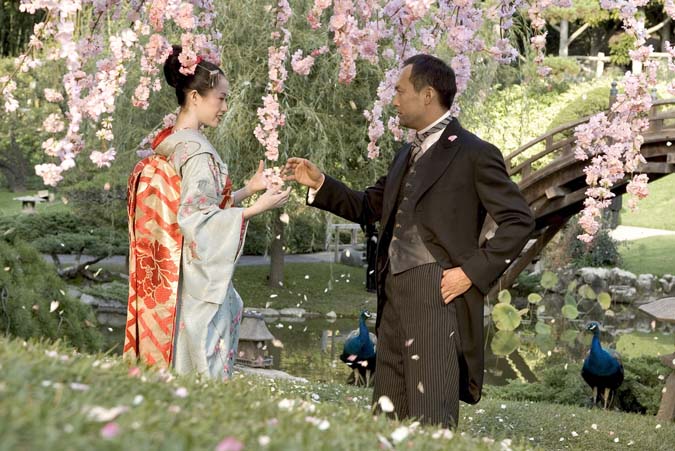
Memoirs of a Geisha - a movie

Last night I went with my wife and friends to see Memoirs of a Geisha, or "Sayuri" in Japan. Before I saw it I had read several reviews, all having very qualified statements. I can conclude that anyone who has read anything about this movie should see it before they comment.

I have heard two strains of criticisms about this movie. First, many are upset that the leading female roles are played by Ziyi Zyang, Michelle Yeoh, and Li Gong - Chinese, Malaysian, and Chinese respectively. Second, I have heard various criticisms of the accuracy of the dress, or other aspects of the Geisha world.

Immediately, this made me think of another historically based fiction movie: Cold Mountain. Based on the book of the same name, this movie tells the story of a civil war soldier who returns to his hometown to find his love. The lead characters in this movie were Jude Law (an Englishman), Nicole Kidman (an Australian), was filmed in Romania, and included dozens of Romanian soldiers instead of American Civil War Reenactors (as was done in most recent Civil War based productions in the US such as Gettysburg or Gods and Generals). Just like Memoirs of a Geisha (a.k.a. Sayuri) it brought protests, but is entertaining none-the-less.

Just as you don't watch Saving Private Ryan or Pearl Harbor as a substitute for studying World War Two, you shouldn't rely on Sayuri to learn about Japanese culture. Yes, there were mistakes - just as I found the dance in the middle of the movie to be very Chinese. I do think though that this movie very well may set the record straight that Geisha are not prostitutes, as I had thought before I came to Japan and learned more about the culture myself.

What is important to remember that both Sayuri and Cold Mountain are movies based on works of fiction, giving us a double dose of poetic license. Both have strong stories and beautiful scenery, and cannot substitute as a cultural or historical documentary. It is a movie. Moreover, it is an entertaining movie I think is worth seeing, only if you don't take yourself too seriously and remember that it is just that - a movie.

What are they waiting for?

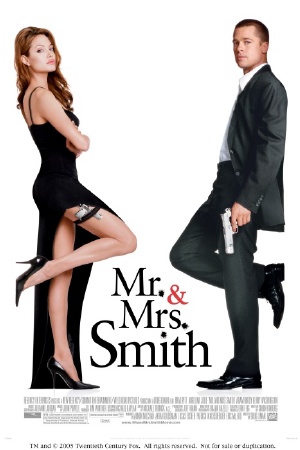
Today my wife and I went to a nicer suburb of Tokyo to see a new movie, Mr. and Mrs. Smith. It was an entertaining movie, and we both enjoyed ourselves.

However, just watching a movie in Japan one becomes aware of small cultural differences. Movie theaters in Japan are very nice and modern. Unlike the US, they are usually on several floors connected by escalators, but are otherwise very similar. Of course there is popcorn and arm rest cup holders. However, there is also beer in the concession stand and a girl selling ice cream and chocolate covered almonds in the aisles before the movie starts.

However, what has always surprised me at Japanese theaters is at the end. While in America everyone makes a rush for the exits (and the closest toilet) as soon as the movie is over, in Japan the lights stay dark and everyone patiently and politely sits through all of the credits. I understand this in comedies where you can sometimes see extra footage of the funniest parts. However, no matter how funny the movie is (or not) everyone waits in their seats. The best part though is this: after sitting through all 200 or so names for assistant assistant makeup case holders... it dawned on me. These Japanese movie goers were watching thousands of names and titles go by, and 95% of them couldn't understand a word! Some things I will never understand - it is just the way it is.

Ripples of Yasukuni


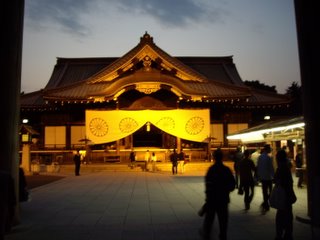
On a cool rainy morning of October 17 Prime Minister Koizumi made a surprise, but not unexpected fifth visit to Yasukuni shrine in Tokyo. It was the first day of the Shrine’s autumn festival, but not an especially significant anniversary of World War II. In August many watchers held their breath not knowing if he would make an appearance at the Shrine on the Sixtieth Anniversary of the war. He didn’t. Shortly thereafter, he called a snap election after dissolving the lower house of the Diet in order to push through his privatization of the Post Office. Throughout the election he was asked if he would visit and replied only that he would make an “appropriate” decision.

Chinese and Korean diplomatic meetings were cancelled. Chinese and Korean citizens protested in the streets. The reaction was harsh and immediate. Every time the Japanese Prime Minister visits the shrine Asia reacts. Just as the flap of a butterfly’s wing in Brazil can cause a typhoon in Taiwan, so too does Koizumi’s visit in Tokyo cause a storm across China and Korea.

How do we explain the interactions between these nations in international relations terminology? Is this simply diplomatic posturing, or does Koizumi’s visit represent a serious international relations crisis? How can International Relations theory answer this question: Why does the historical legacy of World War Two continue to adversely affect international relations in East Asia and why is it of such concern?

Why visit the Shrine?

Christopher Bertram, former director of the German Institute for International and Security Affairs in Berlin and current Steven Muller Chair for German Studies at the Johns Hopkins University Bologna Center, points out in the Taipei Times, “Koizumi's visit to the shrine, officially presented as that of a private citizen, was intended to impress the Japanese public, regardless of its effects abroad.”[1] For Koizumi, it is a private and domestic issue. Some LDP members have declared that it is a domestic issue and that protests by China and Korea are interference in domestic issues. For realists too, this is a domestic issue and does not matter. This analysis requires that Koizumi’s reasoning for visiting the shrine is rationally based, and has a purpose. It is not.

Why does he do it? According to an official statement shortly after his first visit in 2001, he declared:
During the war, Japan caused tremendous sufferings to many people of the world including its own people. Following a mistaken national policy during a certain period in the past, Japan imposed, through its colonial rule and aggression, immeasurable ravages and suffering particularly to the people of the neighboring countries in Asia. This has left a still incurable scar to many people in the region.

Sincerely facing these deeply regrettable historical facts as they are, here I offer my feelings of profound remorse and sincere mourning to all the victims of the war.[2]

Although many credit Koizumi’s desire to attract voters of the Japan Association for the Bereaved Families of the War Dead for his visiting Yasukuni, it is not clear that this mattered in his last, post election visit. It is more widely believed that he visits Yasukuni out of pure personal conviction.

In February 2001, shortly before he became Prime Minister, he visited a memorial to Kamikaze pilots in Kagoshima Prefecture. The letters of the doomed pilots to their mothers left him crying. In April 2001, he notified the Japan Association for the Bereaved Families of the War dead that he would visit Yasukuni. A few weeks later, he was elected Prime Minister. House of Representatives member Koichi Kato describes Koizumi as a “politician who depends much on emotion and intuition instead of logic and reason when making decisions.” He follows his heart to Yasukuni.

When Koizumi first visited the Yasukuni Shrine in 2001 rallies in neighboring South Korea and China were very passionate. Then, more than one thousand protesters gathered in central Seoul to denounce the prime minister’s visit to the shrine. Japanese flags were burned in the streets and many young men severed the ends of their fingers in protest.[3] In April of 2005 Anti-Japanese protests rocked China. Tens of thousands of people gathered in front of Japanese diplomatic facilities to lob eggs, stones, and plastic bottles at the buildings. Japanese made cars and businesses, many Chinese owned, were vandalized. The protests were precipitated by the approval of a nationalistic textbook in Japan, an issue directly related to the lack of atonement the shrine visits represent.[4]

Diplomatic protests have become standard practice. However, this goes further than diplomatic posturing. The Christian Science Monitor reports that relations between Koziumi and Jintao are cold, and that the two are barely on speaking terms. Bilateral talks have been refused since 1999. South Korea has followed suit, with the Republic of Korea’s Prime Minister recently announcing the end of all bilateral talks, even on the sides of international meetings. Diplomatic and public relations with its neighbors could not be much worse.

The business community is becoming greatly concerned, just as business opportunities are opening up in China. After Koizumi’s most recent visit Japan Association of Corporate Executives Chairman Kakutaro Kitashiro warned Koizumi to consider the risk it poses for Japan’s strategic interests.[5] Already, the Chinese have used the threat of canceling or not signing large contracts with Japanese companies as punishment for Koizumi’s visits to the shrine. Notably, the Chinese are looking more closely at French high-speed train technology rather than buy Japanese.[6]

Christian Caryl points out in Newsweek that a major dynamic is the changing face of Asia. As the middle classes of Japan’s neighbors grow, the tacit agreement to ignore the history in return for aid is no longer valid. As she quoted, South Korean Prime Minister Lee Hae-Chan said: “We're not asking for money from the Japanese government. We have enough money. What the Korean government wants from Japan is truth and sincerity, and [a commitment] to help develop healthy relations between the two countries.”[7]

Image and Realities of Japan

East Asia today is increasingly well placed to become one of the most developed regions in the world. The formation of a future East Asian community is a common goal for the countries of the region. At this historic turning point, Japan is determined to contribute constructively to the future of East Asia and, to that end, places great importance on its friendly relations with neighboring Asian countries, including China and the Republic of Korea. Japan has demonstrated this spirit through its actions over the past 60 years. The task of further strengthening its relations with neighboring countries and contributing to the peace and stability of the East Asian region is one of Japan's most important policy priorities.
-- Basic Position of the Government of Japan Regarding Prime Minister Koizumi's Visits to Yasukuni Shrine, October 2005
This, the official message of the Japanese government, is in line with the outward image Japan wishes to promote. Only one other nation besides Japan has a “peace constitution.” Costa Rica and Japan both have officially renounced war as a manner of settling international disputes. Japan’s experience of utter defeat, and America’s determination to democratize, disarm, and decentralize Japan, led to writing of Article IX of the Constitution:
Aspiring sincerely to an international peace based on justice and order, the Japanese people forever renounce war as a sovereign right of the nation and the threat or use of force as a means of settling international disputes.

In order to accomplish the aim of the preceding paragraph, land, sea, and air forces, as well as other war potential, will never be maintained. The right of belligerency of the state will not be recognized. – Article IX, The Constitution of Japan
Masaru Tamamoto, Senior Fellow at the Japan Institute of International Affairs, states that, “More than any clumsy words of apology, renunciation of war has been Japan’s sure way to atone for the guilt of empire and the Second World War.”[8] According Nicholas Kristof, “Japan is kept so shaken and frail by its wartime legacy that it will be incapable of aggression for decades to come.”[9] In this manner, Japan’s peace constitution serves as a major barrier for Japan’s aggression, both internationally as a symbol of Japan and domestically as a barrier to war.

Evidence shows that Japan has ignored the pacifists, and slowly hallowed out the constitution to respond to its realist tendencies. The ink had barely dried on Japan’s new constitution before the Korean War broke out and led to America’s “reverse course’ vis-à-vis Japan. Richard Nixon called Article IX a mistake in 1953 during his vice presidential visit.[10] Since that time, Japan has debated the reality of Article IX and the nature of its security, and slowly the constitution has atrophied. As McCormack notes, “The gap between the pacifist principle of the Constitution and the reality, once established, grew and widened.”[11]

With the aging of the population, Japanese citizens who witnessed the war firsthand and participated in these debates are disappearing. As quoted by the Christian Science Monitor, Masao Kunihiro said, “I'm a dyed-in-the-wool pacifist. My house in Kobe was burned during the war. But I'm like a dodo bird. I feel that pacifism here is on the edge of extinction.”[12] Japanese youth do not feel a connection to the war, and do not wish to be blamed for the atrocities of their grandfathers.

What happens when this barrier is removed? What does this mean for stability in East Asia? If Japan has fewer pacifists, does the chance for war increase? This is the dilemma for constructivists in explaining why there is continued peace in and around Japan.
There are many changes in the security fabric of East Asia. William Rapp of the Strategic Studies Institute notes:
The current era of North Korean nuclear brinkmanship and the global war on terrorism are likely to provide the impetus for Japan to take major steps towards “normal nation,” and then towards significant maturation of, and greater power sharing within, the U.S.-Japan alliance.[13]
These changes have already begun to take shape, and Japan is moving towards “normal nation” status.

The United States has worked to pressure Japan to make these moves, and Japan itself has sought to achieve a more active role in international affairs. The overseas deployment of the Self Defense Forces in Iraq demonstrates the commitment of the current government to these changes. Thomas Wilborn of the Strategic Studies Institute remarks that although much pressure for Japan’s shift from “idealistic pacificism” to a realist defense policy is the result of U.S. pressure, much also comes from internal pressures.[14] Lieggi and Wuebbels note that, “A new generation of Japanese politicians, taking an increasingly realist approach to defense policy, is gaining prominence in the Diet.”[15]

This movement to the right, and the loosening of Japan’s military constraints are furthered by the debate over the revision of the constitution. The Liberal Democratic Party has approved its draft of the new constitution, and specifically promotes the alteration of Article 9. In particular, they wish to recognize the existence of a Japanese military and eliminate the ban on collective self-defense.[16] As a result, Japan today has one of the largest, well-funded, technically advanced militaries in the world.

The Reality – Will Japan Remilitarize?

In order to give lip service to the peace constitution, Japan has limited its military expenditures to less than 1% of its GDP. Only a few times has it surpassed that level, and only by a fraction. In spite of this, 1% of the worlds second largest GDP is a considerable sum of money. In July 2005, according to the World Bank, Japan’s GDP was approximately $4.6 trillion, leaving $46 billion for military expenditures. With this sizable amount of money to spend on the military, even at 1%, Japan has the fourth largest military expenditure in the world. This is smaller than only the United States, United Kingdom, and France.

Relative to its large budget, the number of uniformed military personnel in Japan is relatively small. The total authorized personnel strength for Japan is 262,073 personnel in all branches of the Self Defense Forces. Staffed around 90%, the actual number of forces is just over 236,000 personnel. In comparison, this is smaller than France, but larger than Italy and the United Kingdom.[18] However, this is significantly smaller than all of Japan’s neighbors, including China (2.4 million), North Korea (1 million), Russia (900,000), and South Korea (665,000). Much of this is to do with the extraordinary costs of equipment and personnel costs in Japan as compared to other countries including the US. For example, vehicle costs are three to ten times that of the US military.[19] On a Purchasing Power Parity basis, Japan Drops from fifth to eighth in spending, smaller than the US, China, India, Russia, France, the UK, and Germany. However, this is still larger than most of the world.

This discrepancy can also be explained by the use of high technology in the Japanese military. Since the early eighties Japan has invested in the newest military technology, often with the support of the United States. For example, the Japanese self defense forces fly F-15J aircraft,[20] sail an advanced equivalent of the Arleigh Burke Class Destroyer (like the USS Cole),[21] are building a small aircraft carrier they are calling a destroyer,[22] and are establishing a new elite military unit like America’s Green Berets to fight terrorism.[23]
In October of 2000 the Institute for National Strategic Studies issued ‘Nye-Armitage Report’, a blueprint for the Bush administrations Japan policy. It described the Japanese Self Defense Forces as “well-equipped and competent military.”[24] Only the United States and Japan possess the AEGIS Radar Systems found on these Destroyers.[25] Few countries have advanced fighter jets such as the Japanese F-2 or US F-16, and even fewer countries have aircraft carriers. Its new Destroyers (sic aircraft carrier) will be the largest warships since World War II at 13,500 tons. This is large enough to carry 12 helicopters, and will be larger than aircraft carriers owned by Spain or Thailand.[26] Although there are no plans to do so, it is also capable of carrying vertical takeoff jets like the British and American Harrier.

Japan can also boast domestic production of these advanced military technologies. Mitsubishi builds the F-15J and much of its internal technology. Likewise, Japanese Naval vessels such as the “Kongo” Class Destroyer are based upon American designs and are manufactured in Japan.[27] The only weakness to the modern Japanese military is that it relies heavily on the US defense industry for design work, but much of the actual construction is conducted in country. A recent example of this arrangement includes a project by United Defense to build a component of shipboard vertical launch missiles. Japan will fund 26% of the project.[28]

The Theories

Both realist and constructivist scholars have addressed the source of Japanese security policy. For constructivists, Japan is a prime example of how norms and domestic politics can restrain tendencies for Japan to rearm itself. Jennifer Lind says, “Constructivist scholars argue that since World War II, domestic Japanese norms have prevented major expansion of Japanese military capabilities and roles.”[29] However, for realists Japan is or wants to be a “normal nation” that seeks to secure itself with military power. Lind calls this passing the buck: “Both schools [offensive and defensive realists] argue that security concerns trump other factors in the development of foreign policies.” Evidence shows that both are taking place.

John Ikenberry points out that there are reasons to believe that realism is a valid explanation for Asian-Pacific International Relations Theory: “The region [East Asia] continues to hold the potential for traditional security conflicts that result from dynamics such as major power rivalry, competing territorial claims among sovereign states, and the operation of the security dilemma.”[30]

"However, it is also true that Koizumi's visits to the shrine are not in Japan’s interest. A Brookings Institution Report says it well: “Article Nine is the backbone for an attractive Japanese national identity that stands foursquare for peace and non-proliferation—two highly admirable values. It is, moreover, a potential "soft power" resource—even if it has never been wielded to great effect.”[31]

Katzenstein and Okawara call for an eclectic analysis of East Asian security. Specifically, they call for a problem driven approach to solving the problems of East Asia. Neither realist theory nor the constructivist approach alone can explain why Japan has one of the strongest militaries in the world or why and with what result the Prime Minister of Japan will visit Yasukuni Shrine. An advantage Katzenstein and Okawara note is that “a problem-driven approach to research has one big advantage. It sidesteps often bitter, repetitive, and inherently inconclusive paradigmatic debates.”[32]

Japan is a land of contradictions, and the paradigm of pacificist state with a strong army is yet another contradiction. In order to understand this phenomenon it is not possible to rely upon a single strain of International Relations theory. International, domestic, security, cultural, and historical considerations are all critically important in the understanding of not only the potential for war in East Asia, but also for understanding why Koizumi goes to Yasukuni.

End Notes
[1] http://www.taipeitimes.com/News/editorials/archives/2005/11/01/2003278307
[2] “Statement by Prime Minister Junichiro Koizumi” Speeches and Statements by Prime Minister Homepage. August 13, 2001. http://www.kantei.go.jp/foreign/koizumispeech/2001/0813danwa_e.html
[3] Jong-Heon, Lee. “Anti-Japanese sentiment surging in S.Korea.” United Press International. August 14, 2001.
[4] http://observer.guardian.co.uk/international/story/0,6903,1461648,00.html
[5] http://www.japantoday.com/e/?content=news&cat=3&id=352320
[6]http://www.chinadaily.com.cn/english/doc/2004-02/24/content_308867.htm
[7] http://japanfocus.org/article.asp?id=428
[8] Tamamoto, Masaru. “A Land Without Patriots.” World Policy Journal. Fall 2001. pp. 33-40
[9] Kristof, Nicholas D. “The Problem of Memory.” Foreign Affairs. Nov/Dec 1998; 77, 6.
[10] McCormack, Gavan. “The Emptiness of Japanese Affluence.” London: M.E. Sharpe, 1996. p. 191.
[11] Ibid., p. 193.
[12] Marquand, Robert. “Pacifist Japan beefs up military.” The Christian Science Monitor. August 15, 2003. http://www.csmonitor.com/2003/0815/p06s02-woap.html
[13] Rapp, William E. “Paths Divergent? The Next Decade in the U.S.-Japan Security Alliance.” Strategic Studies Institute. National Defense University. 2004. p. 7. http://www.carlisle.army.mil/ssi/pubs/2004/paths/paths.pdf
[14] Wilborn, Thomas. “Japan’s Self-Defense Forces: What Dangers to Northeast Asia?” Strategic Studies Institute. May 1, 1994 p. 21.
[15] Lieggi, Stephanie and Mark Wuebbels. “Will Emerging Challenges Change Japanese Security Policy?” Center for Nonproliferation Studies. December 2003. p. 1.
[16]http://www.asahi.com/english/Herald-asahi/TKY200510310093.html
[17] www.sipri.org/contents/milap/milex/mex_major_spenders.pdf
[18] “The World Fact Book.” Central Intelligence Agency. http://www.cia.gov/cia/publications/factbook/
[19] http://www.globalsecurity.org/military/world/japan/budget.htm
[20] “F-15 Eagle.” Military Analysis Network. Federation of American Scientists. http://www.fas.org/man/dod-101/sys/ac/f-15.htm
[21] “DDG Kongo Class.” Global Security.org. http://www.globalsecurity.org/military/world/japan/kongo.htm
[22] Sherman, Kenneth B. “A Carrier Named Destroyer.” Journal of Electronic Defense. March 2004. Vol. 27, Issue 3, p. 24.
[23] “Japan to Create Its Version of Green Beret Unit.” Jiji Press English News Service. Tokyo: March 18, 2004. pg. 1.
[24] “The United States and Japan: Advancing Toward a Mature Partnership.” INSS Special Report. National Defense University. www.udu.edu/ndu/SR_JAPAN.HTM. October 11, 2000.
[25] Glosserman, Brad. “Making History the Hard Way.” Comparative Connections. Pacific Forum: CSIS. 4th Quarter, 2001. http://csis.org/pacfor/cc/0104Qus_japan.html
[26] Moffett, Sebastian and Martin Fackler. “Active Duty: Cautiously, Japan Returns to Combat, IN Southern Iraq.” Wall Street Journal. January 2, 2004. pg. A.1
[27] “DDG Kongo Class.” Global Security.org. http://www.globalsecurity.org/military/world/japan/kongo.htm
[28] “US DOD: Contracts.” M2 Presswire. Coventry: March 9, 2004. p. 1.
[29] Lind, Jennifer. “Pacifism or Passing the Buck?” International Security. Sumer 2004, 29:1, pp. 92-121
[30] Ikenberry, G. John and Michael Mastanduno. “International Relations Theory and the Asia-Pacific.” New York: Columbia University Press. 2003.
[31] http://www.brookings.edu/fp/cnaps/events/20041215.htm
[32] Katzenstein, Peter J and Nobuo Okawara. “Japan, Asian-Pacific Security, and the Case for Analytical Exlecticism.” International Security. Winter 2001/02, 26:3, pp. 153-185.

Smokin'

Musashino city passed an ordinance in the last few years forbidding smoking in front of the stations. There is a small area within one block of the station where you aren't allowed to smoke on the sidewalk, except for at the "manner point." There are ash trays located near the entrance where people can do their business.

However, people still smoke. Since this is a city ordinance, the police don't get involved - they are at the state level. No one says a word, even though the city has hired these young girls who wear bright yellow jackets (see photo) and hand out nose tissues with information on the law. However, they seem to hand out tissues to only those who don't smoke (and are suffering from smoke allergies...). Note the old man standing in the photo smoking, just next to the "don't smoke here girls."

I guess I needn't mention that the sign in between them says, "don't park your bike here" even though there are hundreds of bikes lined up just in front of the next sign.

Popular Posts